Management Education

Courses

Executive Leadership (ORBH 450)

The purpose of this course is to help you understand the current theories and effective practices of executive leadership, and through this understanding, to help you enhance your own leadership practices and capabilities. We will examine the methods, challenges, trade-offs, and frontiers of executive leadership through application of leadership concepts to actual case studies. Student teams will identify and conduct at-a-distance and in-depth projects studying an executive leader. View Syllabus

Women in Organizations(ORBH 460)

The purpose of this course is to help you understand the leadership and managerial issues surrounding women in organizations. Offering more complex understandings of issues related to professional women and work, the course will help you increase self-knowledge about your own values and practices, as well as enhance your capabilities as a leader and manager. We will examine the opportunities, challenges, trade-offs, and organizational dynamics experienced by women in work organizations, as well as study examples of effective individual behaviors and organizational practices. Through application of concepts to case studies and a project requiring interviews with practicing women managers, you will gain greater awareness of the key issues and concerns influencing women's effective participation in organizations. View Syllabus

Organizational Systems (ORBH 541)

Organizational systems are ubiquitous, dynamic, complex, paradoxical human institutions, among several other things. Understanding how they work - and don't work - often exceeds our mental processes, metaphors, language, and science. But theory, like practice, is not a destination, it is a process. The purpose of this course is for you to enjoy becoming familiar with various approaches that are currently employed to understand organizational systems. I hope that our journey will open some doors, provide some insights and skills, and exercise creativity in integrating and extending our current repertoire of perspectives for organizing collective action. View Syllabus

Executive Education

Sample Courses:


LEADERSHIP


Creating and Communicating Vision

Leadership occurs only when people are engaged to follow. An effective leader brings about the creation of a shared vision, essential to engaging and involving people in the group or program which he or she leads. To be a committed and engaged member of an organization, we must want to belong, believe in, and give our all to the organization. The congruence of our personal vision, values, and philosophy with that of the organization and its culture, determines the degree of our involvement, productivity, excitement, and innovation. In this highly interactive program, participants will learn about ways to lead others so as to excite their passion, imagination, and engagement through vision.

EMOTIONAL INTELLIGENCE


Introduction to Emotional Intelligence

Outstanding leaders, executives and managers distinguish themselves by their ability to understand and manage themselves and to understand and work with others. It is a given that technical and functional expertise is the foundation for effective performance. But Emotional Intelligence (EI) competencies overwhelmingly distinguish outstanding leaders from average performers. Participants in this program learn the concept of EI, its component competencies and how to use EI to stimulate outstanding performance. The class also offers techniques for developing EI competencies in others.

WOMEN IN LEADERSHIP


High Impact Leadership for Women

Women rising from management to leadership need a new set of skills, insights and philosophies. This program is designed to assist women in enhancing their leadership impact and contributions, forging new inroads and dispelling stereotypes. Specifically, the seminar and course materials are designed to provide an enhanced understanding of what it means to lead with high impact. In this highly interactive program, participants will identify the strategies and develop the real-world skills needed to lead effectively. In addition, specific tools and approaches will be provided to help women build work environments where leadership and empowerment are emphasized.

Women & Organizational Politics: Developing Power and Influence

Although job competency is valued, organizational politics plays a big part in how well things get done on the job. A high-performance career entails knowing how to read organizational cues, as well as being comfortable with positional and personal power. To develop maximum leadership potential, women must be particularly savvy in dealing with this unspoken reality. This seminar will incorporate case studies, assessments, and discussions to examine the issues around organizational politics. It also will provide a framework to enable women to gain greater savvy about the oft unspoken realities of organizational dynamics, and learn strategies to proactively improve higher-level leadership skills.

Leading With Integrity: Women's Opportunities and Challenges

Women face exciting leadership opportunities and challenges in today's world. This program is designed to increase women's skills, knowledge, and confidence in leading and managing in complex organizations. We will address questions such as: What are the valued attributes and behaviors of women leaders in the workplace? How do women define and find work and career success? How do managerial and professional women successfully balance their multiple responsibilities and commitments? How can women increase their overall leadership impact in organizations? How can women lead with integrity?

The goal of the program is to help women understand the leadership and managerial issues surrounding women in organizations, and to assist them in recognizing and enhancing their unique leadership skills and competencies. Interactive in nature, this program includes leadership assessment, group discussion, skill development, and networking.

Leveraging Human and Social Capital: Advanced Leadership Skills for Women

To move to higher levels of impact and contribution in today's fast-paced work environment, women need to develop and leverage enhanced leadership skills and knowledge. The goal of this program is to help women understand that successful leadership arises from effective management of both our selves and our relationships in professional and personal settings.

The program is designed to assist women in recognizing and developing their human and social capital in leadership contexts. Human capital consists of the personal elements that engender excellent performance as a leader, such as vision, strategic focus, personal presence, inspirational skills, and creation of supportive work environments. Social capital consists of the interpersonal relationships that yield valued resources and connections, such as powerful networks, mentors, alliances, cooperative work arrangements, and other ties of trust, reciprocity, and exchange. Learning to leverage both human and social capital is vital to women's success as leaders in organizations.

Interactive in nature, this program includes assessment, small group activities and discussion, skill development, and networking.

WOMEN IN HEALTHCARE LEADERSHIP


Women in Healthcare Leadership: Leading with Emotional Intelligence

To effectively address the various opportunities, pressures, and stresses that can so easily emerge and overtake people in health care organizations, leaders must learn to recognize, motivate, and effectively manage their own and others' emotions. In today's complex health care organizations, leaders are charged with igniting the positive emotions of their people and countering unproductive spirals. In this program, participants learn the concept of emotional intelligence (EI), its component competencies, and how to use EI to stimulate outstanding performance in health care settings. The class also offers techniques for leaders serving as coaches to help others develop EI competencies.

The goal of the program is to equip women in health care fields with a deeper understanding of how leadership is embedded in relationships and how positive emotions spark and fuel the most productive relationships.

Women in Healthcare Leadership: Leadership that Makes a Difference

Women face exciting leadership opportunities and challenges in today's health care field. This program is designed to increase women's skills, knowledge, and confidence in leading and managing in complex health care organizations. We will address questions such as: What are the valued attributes and behaviors of women leaders in health care? What are the differences between management and leadership? How can managerial and professional women in health care successfully enhance their leadership impact and contributions, forge new inroads, and dispel stereotypes? How can women lead with integrity in their health care organizations? The goal of the program is to help participants understand the leadership and managerial issues surrounding women in health care organizations, and to assist them in recognizing and enhancing their unique leadership skills and competencies. This highly interactive program includes leadership assessment, group discussion, skill development, and networking.


side bar sample image


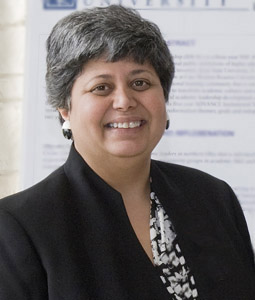
Diana Bilimoria
KeyBank Professor
Professor of Organizational Behavior
Weatherhead School of Management

Office: Peter B Lewis Building 427
Phone: 216-368-2115
E-mail: diana.bilimoria@case.edu